

Surf, Rest, Repeat: Why a Surf Camp Holiday Is the Ultimate Wellness Reset

Updated: Oct 10
There is a particular kind of tired that only the ocean creates — muscles that have worked, a mind that has quieted, and a body that has found its rhythm again. A surf camp holiday delivers this in concentrated form, and once you've experienced it, you'll understand why surfers keep going back.

Whether you're a complete beginner or someone who has surfed on and off for years, a surf camp offers something that a regular holiday does not: structure that actually restores you.
The Physical Benefits: Movement That Doesn't Feel Like Exercise
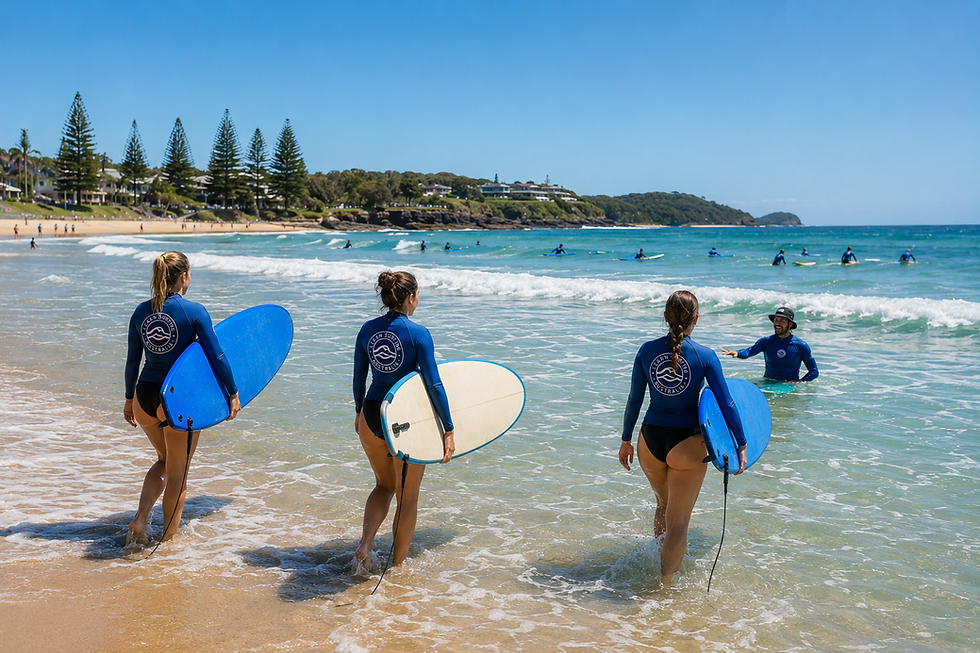
Surfing is a full-body workout masquerading as play. Paddling builds upper body and core strength; popping up works your legs and balance; reading waves sharpens your spatial awareness and reaction time. At a surf camp, you'll typically surf two to three sessions per day with coaching, which means you're getting guided fitness without setting foot in a gym.
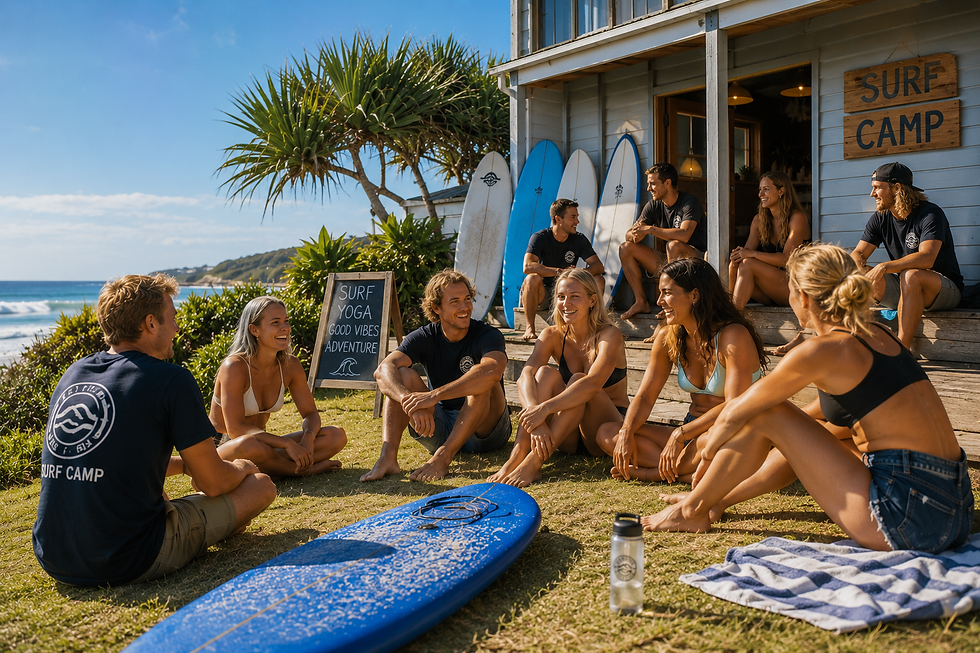
Many surf camps also incorporate yoga, stretching, and beach meditation. These aren't add-ons — they're intelligently matched to surfing. Yoga addresses the tight hips and rounded shoulders that paddling creates, helping you progress faster and feel better doing it.
Australian research consistently shows that regular time near or in the ocean is associated with lower stress, reduced anxiety, and improved mood. Salt air, negative ions, and the rhythm of waves are measurably calming. Time in the water isn't self-indulgence — it's recovery.
The Mental Benefits: Presence by Force
One of the most underrated things about surfing is that it is impossible to think about your inbox in the water. You are entirely in the present moment — reading the horizon, timing your paddle, watching the wave face. Psychologists call this state "flow," and it is one of the most effective stress-reduction states a human being can enter.
A surf camp amplifies this by removing everything else: no commute, no cooking, no decision fatigue beyond whether to take the left or the right. You sleep when you're tired. You eat well. You surf. You rest. Then you do it again.
Many guests report that a week at a surf camp delivers the mental reset they couldn't achieve in months of normal life.
Choosing the Right Surf Camp Holiday for Your Level
Not all surf camps are the same, and choosing one that matches your level and goals makes a significant difference.
For complete beginners: Look for camps with a high coach-to-student ratio (ideally 1:4 or better), beginner-friendly beach breaks, and no expectation of prior experience. The best beginner camps use soft-top boards and spend structured time in the shallows before anyone attempts to stand.
For those who've surfed before: Look for video analysis, personalised coaching, and intermediate-level breaks. A good intermediate camp will identify your specific blockers — whether that's timing, positioning, or reading waves — and help you break through a plateau.
For wellness-focused travellers: Surf and yoga retreats have become a genuine category, with programs in Bali, Sri Lanka, the Maldives, and closer to home across coastal Australia. These combine quality surf coaching with yoga, breathwork, and nourishing meals.
You can explore a curated selection of Australian surf camps and international retreat options at learnsurfing.com.au/surf-camps.
What a Typical Surf Camp Day Looks Like
Most well-run surf camps follow a rhythm that has been refined over years:
Early morning yoga or meditation (optional, but worth trying)
Breakfast — substantial and timed before the first session
Morning surf (2–3 hours, usually the best conditions of the day)
Lunch and rest
Theory session or video analysis
Afternoon surf (optional or shorter, depending on conditions)
Group dinner
Low-key evening — usually social, early to bed
The structure creates a kind of positive constraint: you're not responsible for planning anything, which means you can give everything to the surfing and the recovery.
A Note on Community
Something that surprises first-time surf camp guests is how quickly strangers become people you're comfortable catching waves with. There's a vulnerability in learning something physical in a group that bypasses the usual social filters. Most people leave surf camps with at least one friendship they didn't expect.
The shared language of the ocean — who paddled for what wave, the wipeout everyone saw, the set that came through at sunset — builds connection quickly.
Ready to Find Your Reset?
Whether you're based in Sydney and looking for a weekend escape, or planning an international trip, Australia has some of the world's best beginner and intermediate surf camp options. For those looking to go further, international retreats in Bali and Southeast Asia offer extraordinary conditions combined with genuine rest.
Browse our curated list of Australian surf camps and international retreat options at learnsurfing.com.au/surf-camps.
Not quite ready for a camp?
Start with a surf lesson at learnsurfing.com.au/surf-lessons-noosa and build your confidence first.
Learn Surfing Australia may earn a commission if you book or buy through links on this page, at no extra cost to you.

Comments